I recently wrote an article on my main blog 21st Century Chalk Called Your Neurodivergent Child Isn’t Broken — They’re Just Running MacOS in a Windows World. The article reframed neurodivergence as a difference and not just a disability. It did not make light of the real difficulties that people with ADHD and dyslexia had, but wrote about how research suggested it was better to see those difficulties through a different lens. In the article, I mentioned
"...reading and writing are not natural human actions..."
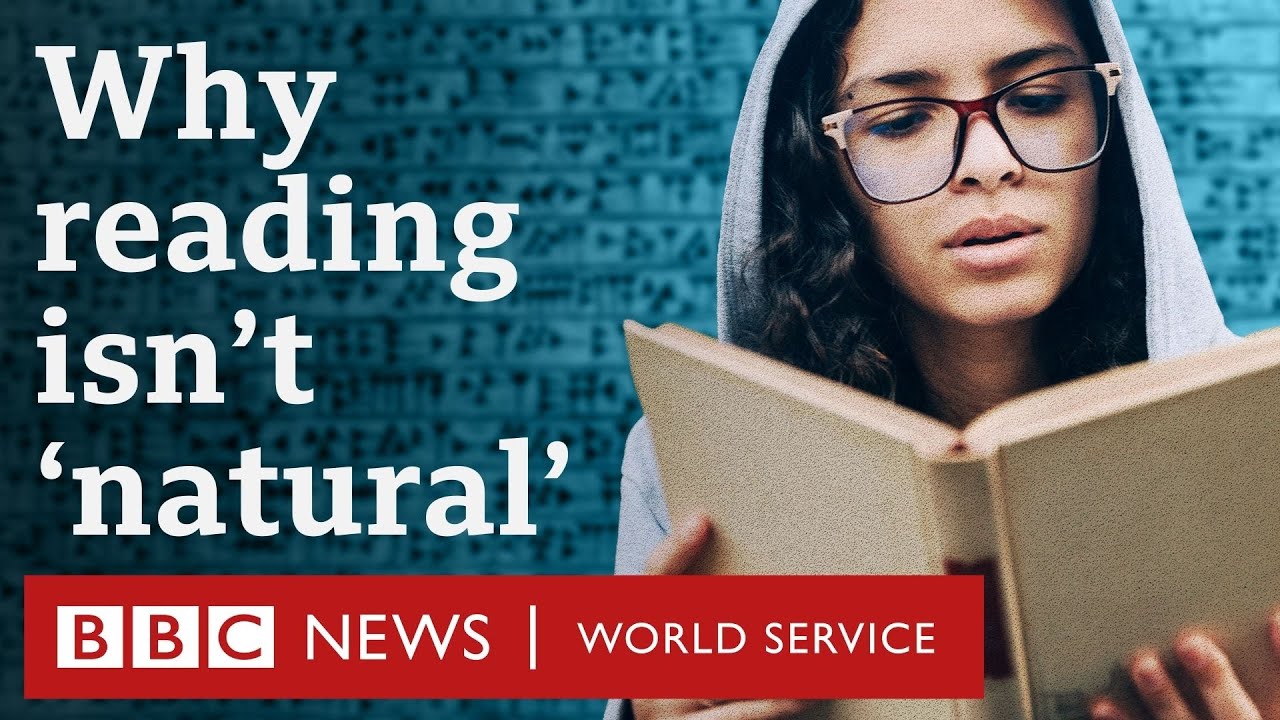
This is backed up by a recent video by the BBC 'How reading changes the way your brain works'. The video discusses the different parts of the brain that need to come together to decode words, sounds and meaning, and how the efficiency of those different parts working together directly reflect the difficulty someone has in literacy. The most interesting thing mentioned in the video was the difference in dyslexia between different cultures and writing forms, specifically Chinese and English. Essentially, someone with dyslexia in English would not have the same difficulties in Chinese. In this article, I want to talk about this and how this is related to some key SpellMe features and solutions.
1. Structure the Unnatural

The point: The video mentions that reading was unnatural, requiring different parts of the brain (not usually associated with each other) to work together. This is why reading and spelling is difficult to just 'get', and many would need an explicit and systematic approach to learning it.
The solution: Structured literacy, the basis of the SpellMe word lists, can be used to help with this issue by forming a scaffold round the learning, that students can build upon. It explicitly teaches phonology and sound-symbol mapping, rather than leaving the learner to guess. For more on this you can read the previous post The Science Behind SpellMe - Part 1: Word Lists.
2. Let Construction Lead to Understanding
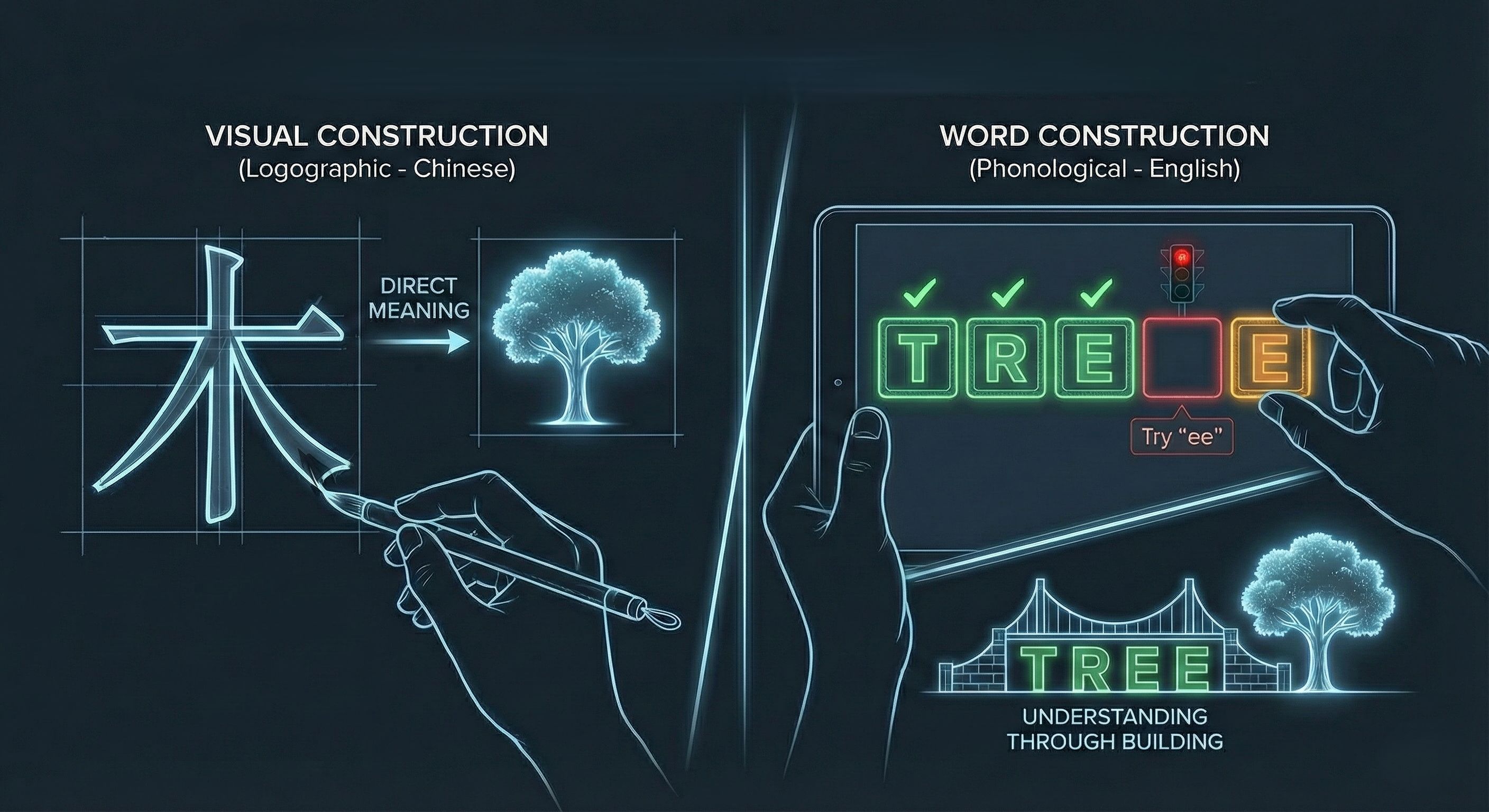
The point: The video mentions that Chinese is a logographic language (where symbols, or logograms, represent entire words, rather than sounds or syllables). Students with a deficit in phonological awareness (hearing the sounds in words), would struggle in English. But that same student might survive or thrive in Chinese because they can rely on Visual Memory to recognize the characters directly, bypassing the phonological "glitch."
The solution: The process of constructing the word in English, just like drawing the logograms in Chinese can help. Associating the meanings with constructing the word helps with understanding. Writing is the best way to help solidify reading and spelling knowledge and should be used in conjunction with SpellMe wherever possible. However, SpellMe also uses the process of constructing words through the traffic light hint system - showing the speller where they went wrong - and the leveled gaps feature. This mechanism speeds up the process of learning through failure and repetition, which leads me into the final point.
3. Nurture the Neuroplasticity & The "Gamified" Fail

The Point: The video mentions neuroplasticity, or how the brain changes depending on the input. It is not fixed so can rewire itself given enough repetition and error correction. The problem is, a learner needs a welcoming and nurturing environment in order for this to happen. If the emotional cost of error is too high (e.g. like feeling shame), the brain disengages, and plasticity stops.
Solution: SpellMe actively rewards failed attempts, because we understand that failure is the stepping stone to success. By gamifying the repetition and removing the shame of getting it wrong, the app keeps the brain in a "plastic" state (willing to try again), which is a way for new neural circuits described in the video to grow. Those failed attempts seen in a positive constructive light help the brain develop those learning links.
Conclusion
This video highlighted and gave further evidence for the fact that dyslexia can be seen as a difference confined to cultural characteristics, not just a learning disability. This helps us see it through a different lens, understanding it in a different way and providing innovative solutions to suit. If you are interested in finding out more, you can check out the video and read the research articles below, then share your thoughts.
Sources:
- Biological Abnormality of Impaired Reading Is Constrained by Culture
- How reading changes the way your brain works - BBC World Service (Youtube)
- Prevalence and Associated Risk Factors of Dyslexic Children in a Middle-Sized City of China: A Cross-Sectional Study
- A case study of an English-Japanese bilingual with monolingual dyslexia
- Images by Gemini