Using the user interface to the achieve the greatest learning effects.
In Part 1, we looked at the foundations of reading and spelling instruction through phonics and structured literacy. We also discussed the research based justifications for using it in SpellMe. Many other spelling apps employ the same principles, but hardly any employ the UI features present in SpellMe, this is what sets it apart from the others.
The SpellMe UI has been carefully shaped by real-use most notably by my now eight-year-old son (the first employee of SpellMe Ltd 😛). Watching how he approached the app, where he struggled, and how he responded to errors directly influenced the design of the interface. The six features that follow grew out of this process, and each is grounded in research to help students understand and improve their spelling.
1.Encouraging persistence
Many existing spelling apps have a simple UI outcome. When the user spells a word wrong, it shows the correct answer and then moves to the next word. This does not allow the speller to understand where they went wrong, doesn’t give them an opportunity to put it right and ultimately wastes a valuable learning experience.
SpellMe takes a different approach, it does not allow the user to move on until the word is spelt correctly. This sounds a bit harsh, but there are special feedback methods employed that make this an easy process, which I will discuss below in 2. Coloured feedback and 3. Gradual hints and scaffolding. The main focus here is persistence and an opportunity to spell the word, even if it means they are copying the answer from the screen.
This simple design choice is based on evidence that errors are powerful learning opportunities. Metcalfe (2017) explains that “error-based learning” strengthens memory when students are required to correct their own mistakes. Kornell, Hays, and Bjork (2009) also found that even ‘unsuccessful retrieval attempts’ (aka getting it wrong) can enhance later recall. By making students persist, SpellMe helps build resilience as well as spelling knowledge.
2.Coloured feedback
The first of the feedback methods mentioned above is coloured feedback. If a word is spelt incorrectly, a representation of the student’s attempt is shown in green, orange, and red letters above. Green represents the correct letter in the right place, orange is the right letter in the wrong place, and red symbolizes a letter that does not exist. Dashes are also shown for missing letters at the end of the word. This gives students a clear picture of where they went wrong allowing them to improve at their next attempt.
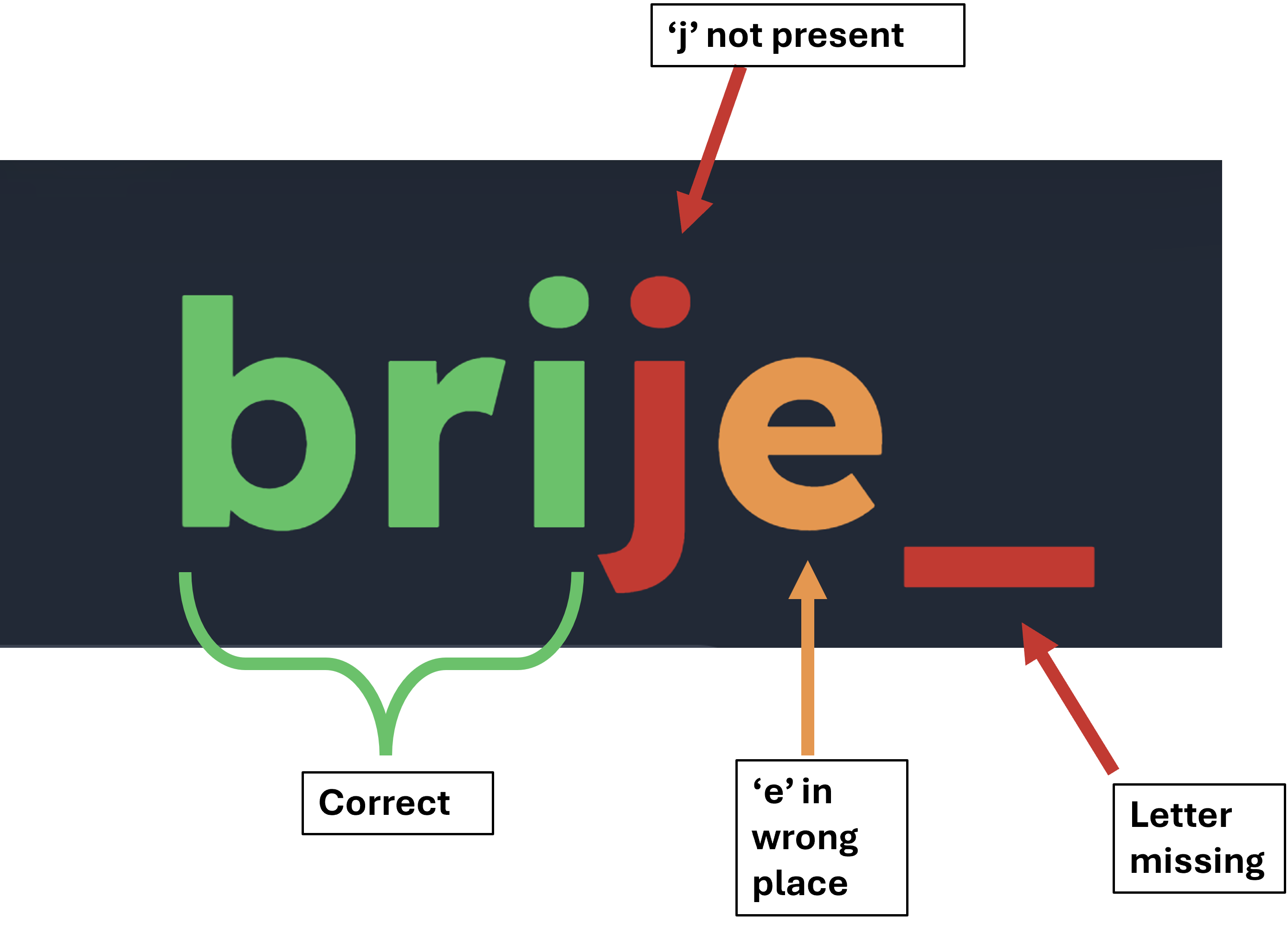
A student spelling 'bridge' as 'brije' would get this feedback
Research shows that feedback is most useful when it is immediate and specific (Shute, 2008). Ehri (2014) adds that paying attention to orthographic mapping (letter patterns) is essential in learning to recognise words. The coloured feedback connects these two strands: students see the exact points of error while also reinforcing letter-sound correspondences.
3. Gradual hints and scaffolding
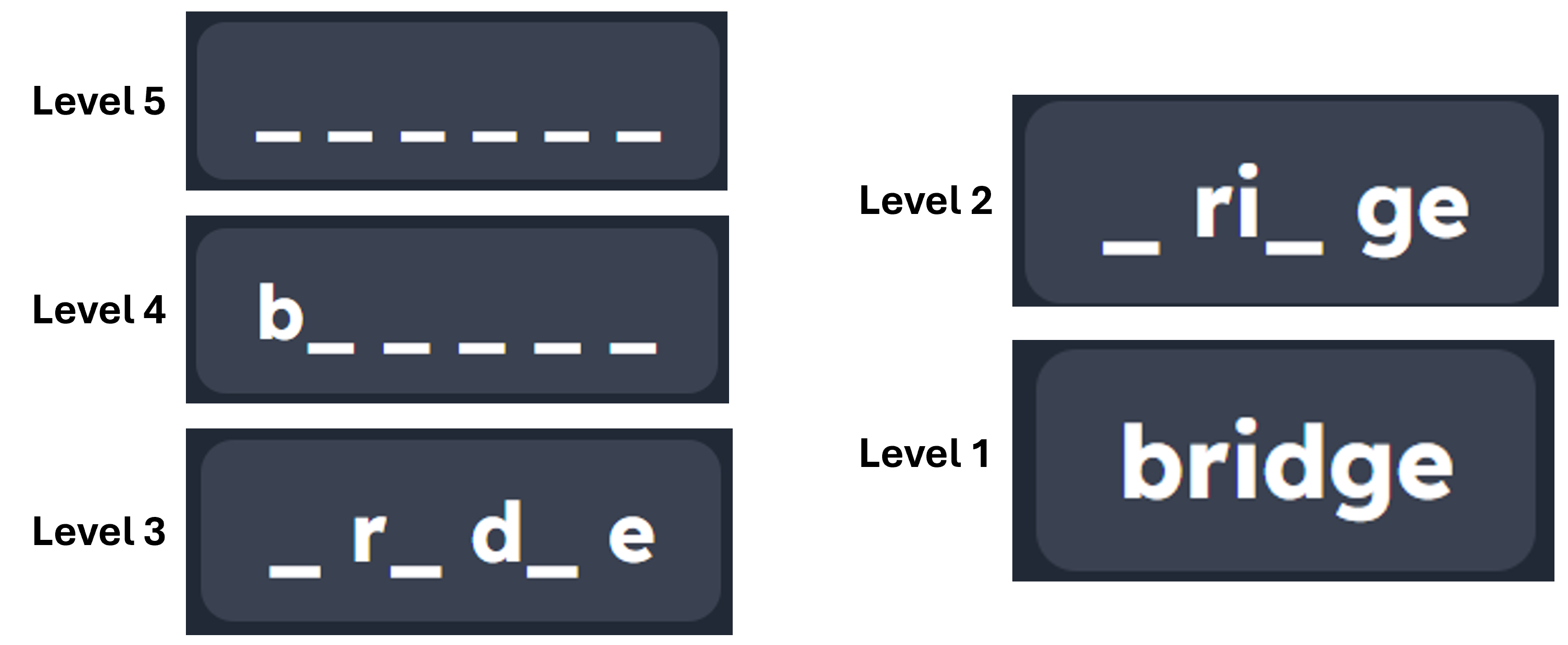
The second feedback method, mentioned above, helps to scaffold the learning experience. SpellMe doesn’t give all or nothing support. If a student struggles, the system reveals more of the word at different levels. There are 5 levels of word proficiency and feedback. Level 1 is the easiest level, where all letters are shown in the feedback hint. This is great for introducing new words to spellers. Level 5 is the most difficult level, where none of the letters are shown to the speller, only underscores which represent the letter. Students that are able to spell the word correct at this level have mastered the spelling of that word.
In Regular mode, the speller or teacher can pick the level the words are shown in. However, after 2 incorrect spellings, the hint level decreases by one before allowing the speller another opportunity. Consecutive wrong spellings cause the level to continue to decrease until level 1, when all letters are shown. The level the students get to before getting it correct is recorded and can be used in Mastery mode, which is discussed below.
This approach is rooted in Vygotsky’s (1978) idea of the zone of proximal development, where learners progress with the right amount of support. Pearson and Gallagher (1983) described this as a “gradual release of responsibility.” By offering different spelling levels, SpellMe makes sure students experience success while steadily moving toward independence.
4. Smart hints based on error patterns
Smart hints is the third feedback method. SpellMe tracks the types of errors students make and provides tailored hints. For example, if a student regularly confuses “i” and “e,” the system can highlight that pattern. This is far more effective than generic advice. This is the only feedback method that is powered by AI, and can be very effective for students who don’t fully understand the focus of the structured literacy based SpellMe word lists.
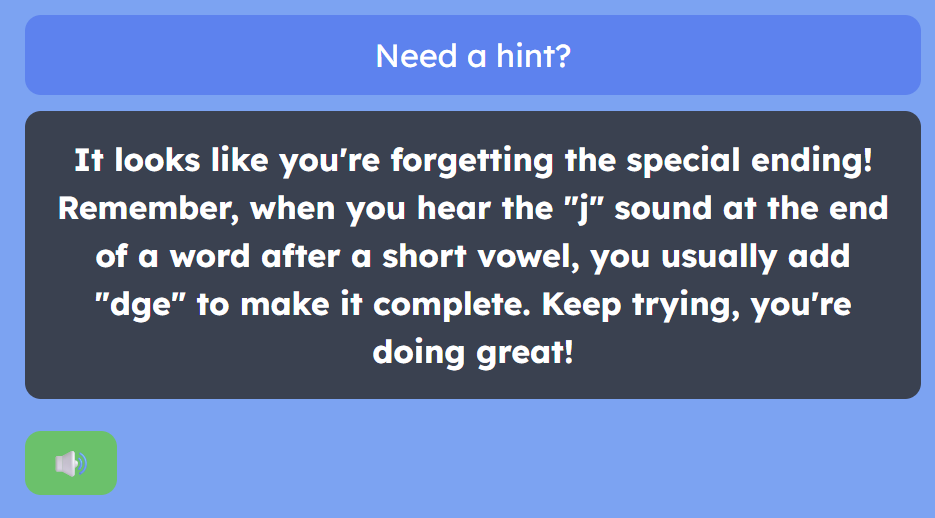
Narciss (2008) shows that adaptive feedback leads to stronger learning gains, while VanLehn (2011) demonstrated that intelligent tutoring systems can approach the effectiveness of human tutoring when feedback is personalised.
5. Mastery mode
The SpellMe UI can act slightly differently depending on the mode that is used. Whereas regular mode goes through the word list once (default) or a user prescribed number of times, in mastery mode, the word list will continue to repeat until all the words are mastered. As discussed in 3. Gradual hints and scaffolding, each word has a success level, which is the hint/feedback level at which the word is spelt correctly. Mastery mode is only completed when all words in the word list are spelt correctly at level 5, which is when no letter hints are shown. All words start at level 1 (unless already visited) and increase in level when correctly spelt and reduce in level if incorrectly spelt. Words that are mastered within the list are removed, so that focus remains on difficult words. This repetition at ever increasing levels ensures that spellers fully understand how to spell.
Bloom’s (1968) research into mastery learning showed that requiring students to master material before moving forward can dramatically improve outcomes. Guskey (2010) later reinforced that the benefits of mastery extend beyond achievement, building confidence and persistence. In SpellMe, mastery mode helps to ensure that students consolidate spelling patterns before tackling harder lists.
6. Story mode - words in context
Finally, SpellMe includes a story mode, where the word list words are embedded in short, AI-generated stories. This connects spelling practice to reading comprehension and vocabulary growth. Bransford, Brown, and Cocking (2000) argue that students learn more effectively when knowledge is presented in context. Story mode also has the ability to personalize the story by the student or teacher adding their own words, and phrases, even the speller’s name to the story. Research shows that students engage more when they are embedded in personalized stories tailored to their own experiences (Miles, 2021). This aspect of personalization makes the learning experience that much more powerful. Story mode brings these ideas together, turning spelling into a richer literacy experience.
Conclusion
SpellMe’s design choices aren’t just about making the app look good or feel engaging. Each feature is rooted in solid research about how children learn to spell and read. By combining persistence, targeted feedback, scaffolding, adaptive hints, mastery, and contextual learning, SpellMe creates a structured pathway for students to succeed. This is what makes SpellMe different: it doesn’t just test spelling, it actively teaches it.