SpellMe's curated word lists are based on the Science of Reading which includes phonics. This is very structured and follows a carefully thought out progression. The word lists are divided into five different types, based on different reading and spelling stages:
- Foundational Phonics
- Advanced Vowel Patterns
- Syllabication
- Morphology
- Grammar and Syntax
Foundational Phonics: Building the Blocks
Word lists covered: Short vowels (a, e, i, o, u), initial and final blends, and digraphs (ch, sh, th).
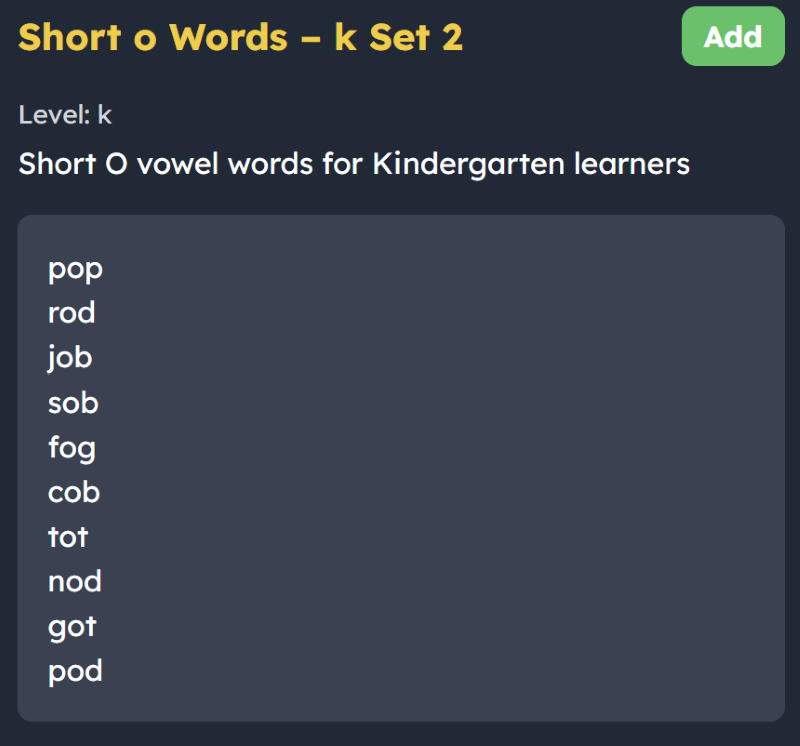
Why it is useful: This stage helps kids match sounds to letters. Once they get these basics down, they can actually sound out and spell words instead of just trying to memorize how they look. 1 2
Advanced Vowel Patterns: Moving Beyond CVC
Word lists covered: Silent E, vowel teams (ea, oa), r-controlled vowels (ar, er), and diphthongs (oi, ou).
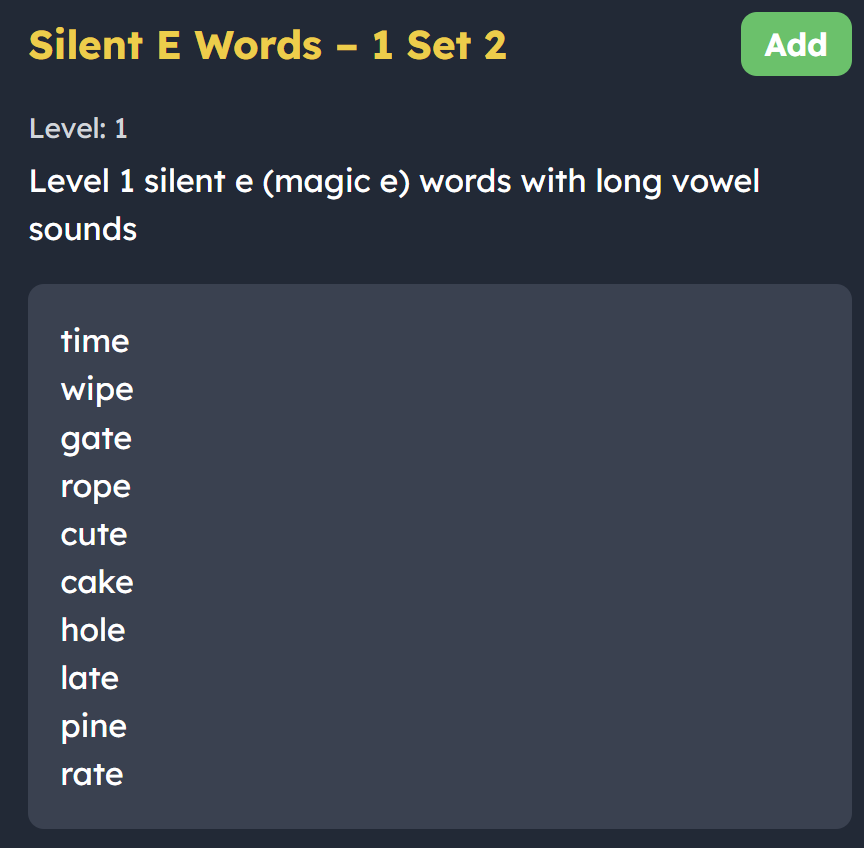
Why it is useful: This shows how sometimes multiple letters team up to make just one sound. Once learners get the hang of this, they'll stop guessing and feel way more confident tackling those trickier words. 1 2
Syllabication: Breaking Down the Big Words
Word lists covered: Open, closed, and consonant-l-e syllables.
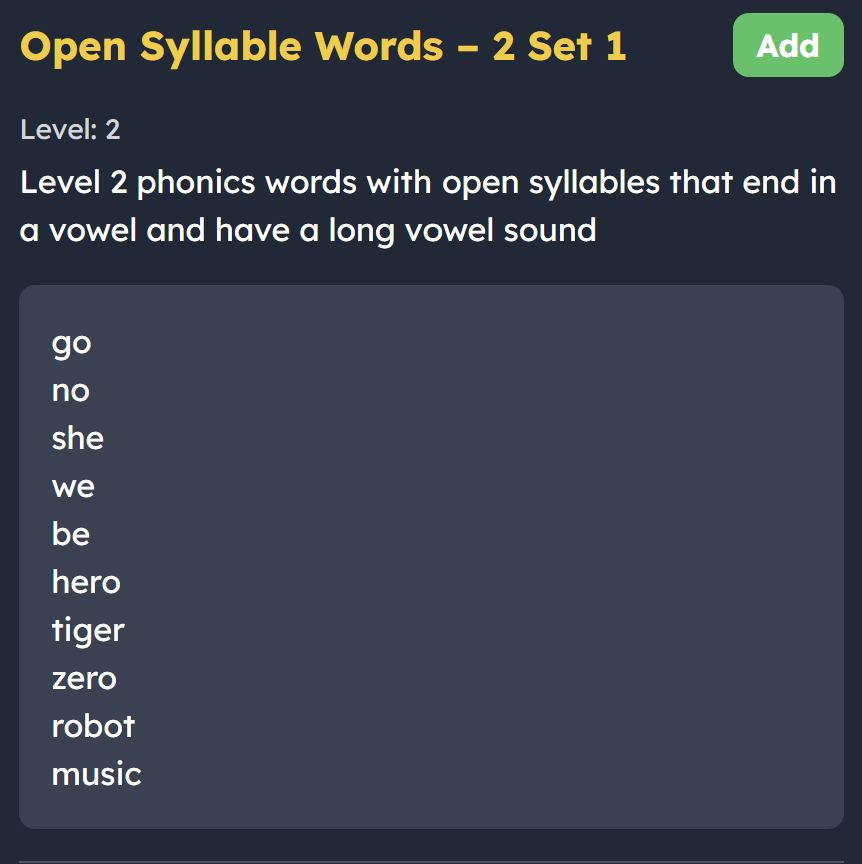
Why it is useful: Syllabication gives students a reliable trick for breaking down big words. It makes spelling longer words much easier. 3
Morphology: The Meaning Makers
Word lists covered: Prefixes (re-, un-, dis-), suffixes (-ful, -less, -ment), and Latin bases (scribe, port, tract).
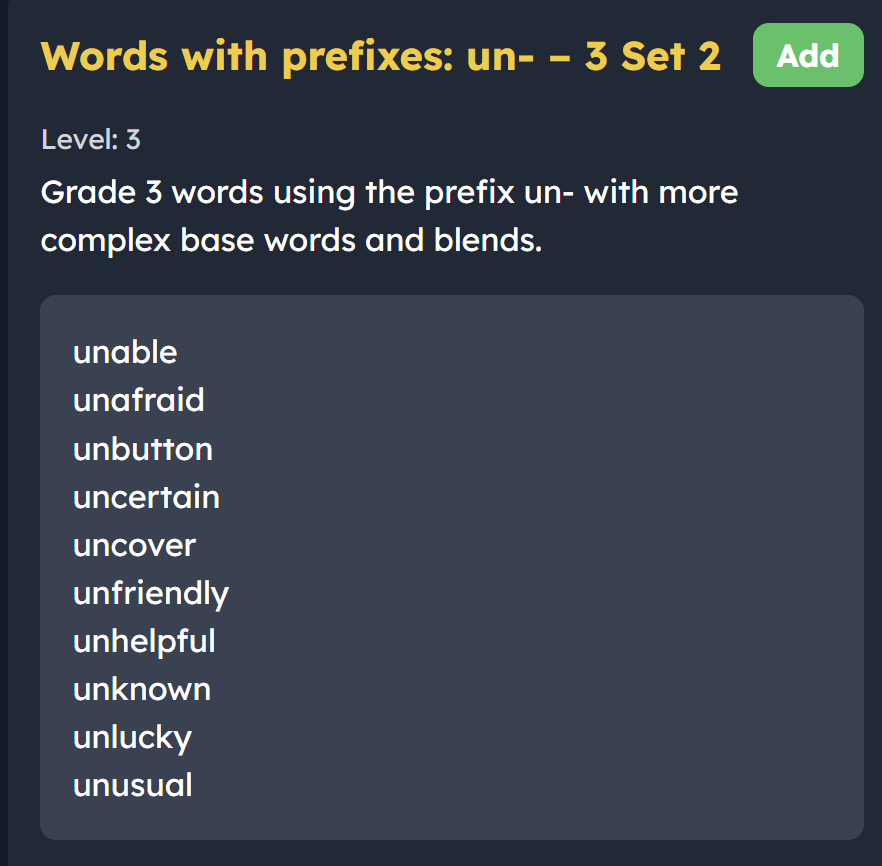
Why it is useful: Morphology links spelling straight to vocabulary and reading comprehension. It shows older or more advanced learners that complex words are built from meaningful chunks rather than just random strings of sounds. 1
Grammar and Syntax in Spelling
Word lists covered: Plurals (regular and irregular), possessives, past tense (-ed), and contractions.
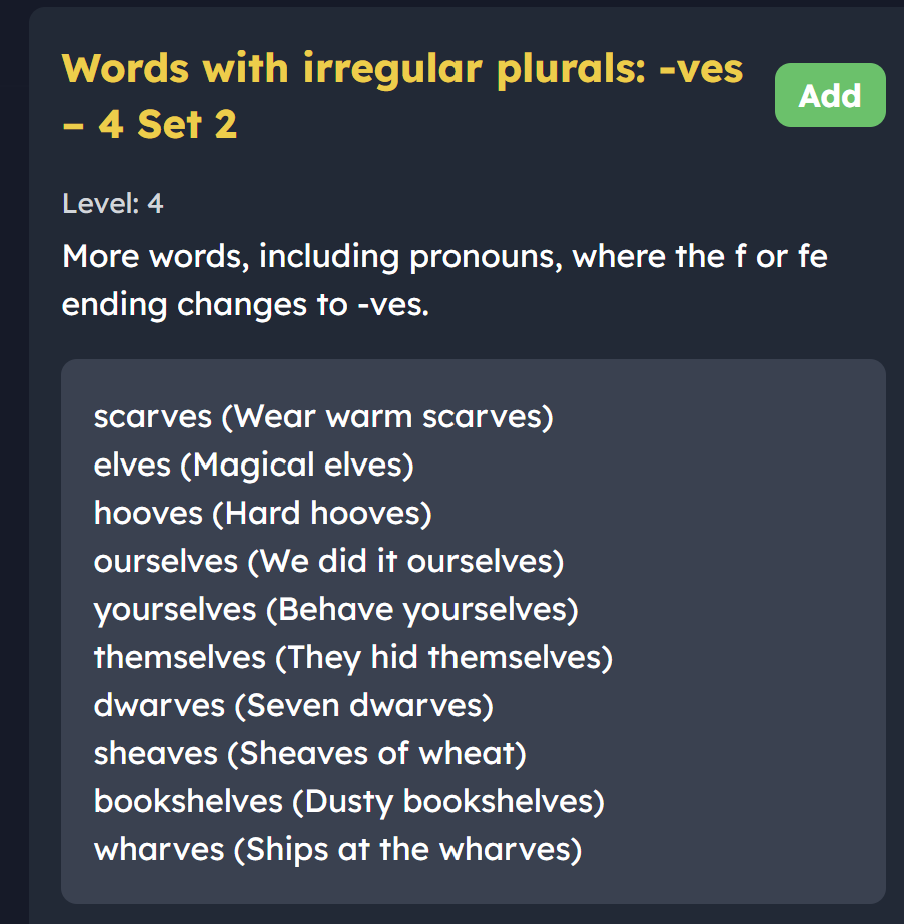
Why it is useful: This helps kids see how grammar rules, like past tense or possessives, actually shape how words are spelled. It makes the rules of English feel much more logical and easier to remember. 2 4
Levels vs Grades
The word lists are also separated by levels depending on the difficulty of the words, going from Kindergarten to Grade 6. We prefer to call them levels rather than grades, because it is normal for students in higher grades to revisit lower level words, and we don’t want students to face any negative stigma. This then allows learners to focus on mastering the orthographic structure at their own pace. There should be at least 2 sets for each of the different types of word list. Those that need more can use the auto generate list feature based on any of the list topics.
Following these word lists helps kids become independent, confident spellers. By working through everything from simple sounds to more advanced word parts, the SpellMe lists offer a simple, research-backed way to learn. Parents and teachers can use this flexible, leveled system to give kids the exact kind of support they need as they grow and learn.
You can read more about how and why structured literacy works so well with spelling in our article The Science Behind SpellMe - Part 1: Word Lists. In that article we talk more about what structured literacy is, why it works, the alternatives, and evidence.
All word lists are available to registered users from the free Basic account to the Premium account, and they can be imported directly into personal word lists and adapted if needed.
Sources
- Tortorelli, L. S., & Bruner, L. (2022). The Word Nerds project: Findings from a research–practice partnership focused on spelling instruction. Journal of Research in Reading, 45(3), 385-405.
- Moats, L. C. (1998). Teaching Decoding. American Educator, 22(1), 1-9.
- Weinrich, B., & Fay, E. (2007). Phonological Awareness/Literacy Predictors of Spelling Abilities for First-Grade Children. Contemporary Issues in Communication Science and Disorders, 34(Fall), 94-100.
- Rollo, G., & Picker, K. (2024). Unpacking the science of reading research. Australian Council for Educational Research.